Industrial filtration systems often face demanding operating conditions, including high temperatures, corrosive fluids, high pressure, and fine particle removal requirements. Traditional filtration media may struggle to maintain stable performance under these environments.
Sintered metal felt filter cartridges provide an advanced filtration solution by combining high dirt-holding capacity, excellent permeability, mechanical strength, and long service life. Unlike conventional woven mesh or disposable filter elements, sintered metal felt structures are designed for continuous operation in harsh industrial processes.
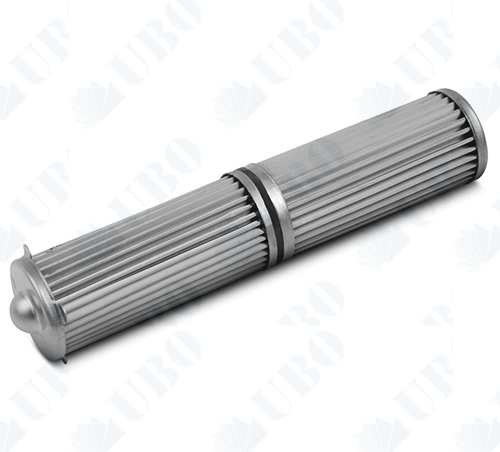
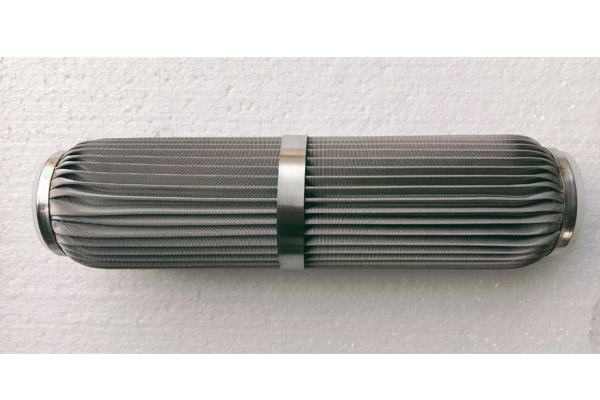
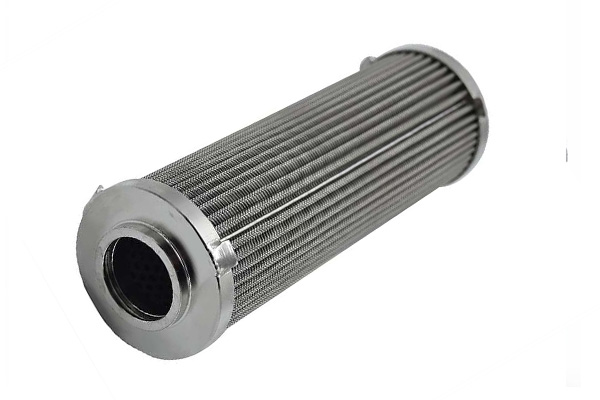
A sintered metal felt filter cartridge is a porous metal filtration element manufactured by compressing and sintering multiple layers of metal fibers at high temperatures.
The sintering process creates a three-dimensional interconnected pore structure that provides effective particle capture while maintaining high fluid permeability.
Common materials include:
Stainless steel 316L
Stainless steel 304
Nickel alloys
Hastelloy
Titanium
Typical applications include:
Petrochemical processing
Hydraulic systems
Gas filtration
Polymer filtration
Pharmaceutical production
High-temperature process filtration
One of the main advantages of sintered metal felt filter cartridges is their ability to capture very fine particles while maintaining stable flow.
The three-dimensional fiber structure creates depth filtration, allowing contaminants to be trapped throughout the filter media rather than only on the surface.
Compared with traditional surface filtration methods, depth filtration provides:
Higher dirt-holding capacity
Longer operating cycles
More stable filtration performance
Reduced replacement frequency
This makes sintered metal felt suitable for applications requiring high cleanliness levels.
Pressure drop is a critical factor affecting filtration system efficiency.
A filter with excessive resistance increases pump energy consumption and reduces process stability.
Sintered metal felt cartridges offer:
High porosity
Uniform pore distribution
Efficient fluid passage
These characteristics help achieve:
Lower initial pressure drop
Higher flow capacity
Reduced energy consumption
The optimized pore structure allows fluids to pass efficiently while maintaining reliable particle retention.
Many industrial filtration applications involve high-pressure or high-temperature environments where conventional filter media may fail.
Sintered metal felt cartridges provide:
High mechanical strength
Excellent pressure resistance
Good dimensional stability
Resistance to vibration and impact
Unlike disposable polymer-based filters, metal felt elements can maintain structural integrity under demanding operating conditions.
Material compatibility is essential for industrial filtration.
Sintered metal felt cartridges are available in corrosion-resistant alloys that can withstand aggressive process conditions.
For example:
| Material | Typical Applications |
| SS304 | General industrial filtration |
| SS316L | Chemical and pharmaceutical processes |
| Nickel Alloy | Highly corrosive environments |
| Titanium | Special chemical applications |
Their ability to operate at elevated temperatures and resist chemical attack makes them suitable for challenging environments.
Unlike disposable filter cartridges, sintered metal felt elements can often be cleaned and reused.
Common cleaning methods include:
Backwashing
Ultrasonic cleaning
Chemical cleaning
Reverse flow cleaning
Reusable performance provides advantages such as:
Reduced replacement frequency
Lower waste generation
Lower maintenance costs
Longer service life
For continuous industrial processes, this can significantly improve lifecycle economics.
The performance of a sintered metal felt filter cartridge depends on several design parameters:
Fiber Diameter
Controls filtration accuracy and pore structure.
Porosity
Influences flow capacity and pressure drop.
Thickness
Determines dirt-holding capacity and mechanical strength.
Layer Structure
Allows optimization between surface filtration and depth filtration.
Engineers can select different structures according to:
Particle size requirements
Flow rate
Operating pressure
Fluid characteristics
Petrochemical Industry
Used for:
Polymer filtration
Catalyst protection
Process fluid purification
Pharmaceutical Industry
Suitable for:
High-purity liquid filtration
Gas filtration
Sterile process applications
Hydraulic Systems
Used to remove contaminants and protect precision components.
Gas Filtration
Provides reliable filtration under high temperature and pressure conditions.
Chemical Processing
Handles corrosive fluids requiring durable filtration materials.
| Feature | Sintered Metal Felt | Traditional Filter Media | ||
| Filtration Type | Filtration Type | Mainly surface filtration | ||
|
High | Limited depending on material | ||
| Pressure Resistance | Excellent | Moderate | ||
| Cleaning Ability | Reusable | Often disposable | ||
| Service Life | Long | Shorter |
The main advantage of sintered metal felt is its ability to maintain filtration performance under difficult operating conditions.
Before selecting a filter cartridge, engineers should evaluate:
Filtration Accuracy
Choose pore size according to required particle removal efficiency.
Flow Capacity
Ensure sufficient filtration area for the required flow rate.
Operating Temperature
Select materials compatible with process temperature.
Chemical Compatibility
Consider corrosion resistance against process fluids.
Cleaning Requirements
Determine whether reusable cleaning performance is required.
1. What is a sintered metal felt filter cartridge used for?
It is mainly used for fine particle filtration in demanding industrial applications such as petrochemical, pharmaceutical, chemical, and hydraulic systems.
2. Why is sintered metal felt better than ordinary filter media?
Its three-dimensional fiber structure provides higher dirt capacity, better mechanical strength, and improved performance under high-temperature and high-pressure conditions.
3. Can sintered metal felt filter cartridges be cleaned?
Yes. Many designs support backwashing, ultrasonic cleaning, and chemical cleaning for extended service life.
4. What materials are commonly used for sintered metal felt filters?
Common materials include SS304, SS316L, nickel alloys, Hastelloy, and titanium depending on application requirements.
Sintered metal felt filter cartridges provide a reliable solution for industrial filtration systems requiring high efficiency, durability, and long-term stability.
Their unique porous fiber structure delivers excellent particle capture, low pressure drop, strong mechanical performance, and reusability under harsh operating conditions.
For industries facing high-temperature, high-pressure, or corrosive filtration challenges, sintered metal felt technology offers a practical way to improve process reliability while reducing maintenance and operating costs.
 Tel
Tel
 WhatsApp
 Message
 Email
Email