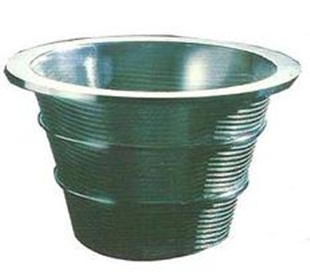
Wastewater treatment plays an essential role in both industrial production facilities and municipal sewage treatment plants. Before wastewater can be safely discharged or reused, it must go through several treatment stages to remove suspended solids, debris, and harmful contaminants.
One of the most important steps in this process is the initial solid-liquid separation stage. During this phase, wedge wire screen support grids are widely used to remove larger particles and protect downstream treatment equipment from blockage and damage.
Because of their high strength, continuous slot design, and excellent filtration performance, wedge wire support grids have become a reliable solution for modern wastewater treatment systems.
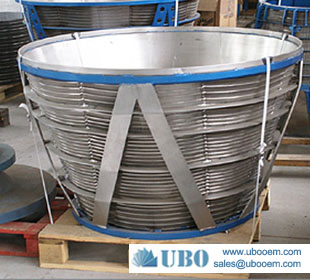
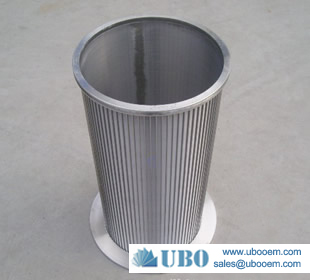
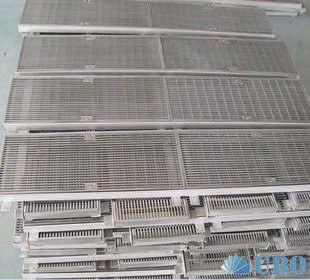
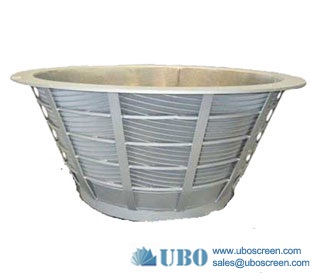
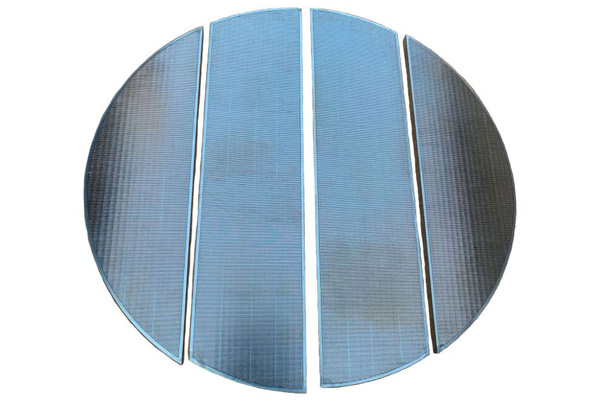
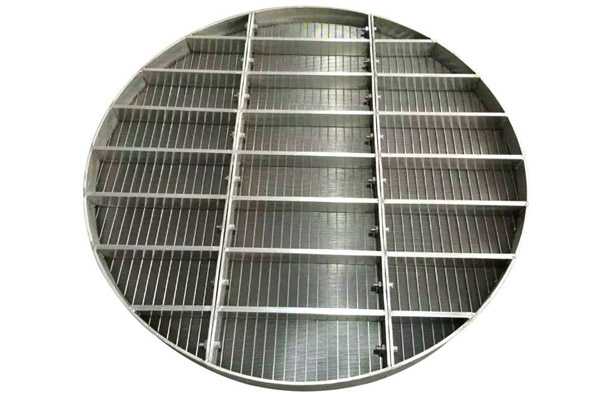
Wedge wire screen support grids are filtration structures manufactured from V-shaped profile wires welded to support rods and reinforced with a surrounding frame. These grids are typically produced using stainless steel or nickel alloy materials to ensure corrosion resistance and long operational life.
Depending on vessel size and installation requirements, support grids are available in two common configurations:
One-piece construction for smaller diameter vessels
Segmented or sectional designs for large tanks and easier transportation
Large-diameter support grids are often divided into multiple sections so they can pass through vessel openings and be assembled on-site.
Wastewater entering treatment systems usually contains large suspended solids such as plastics, fibers, leaves, sludge particles, and other debris.
If these contaminants are not removed during the early stages of treatment, they can clog pumps, damage pipelines, and reduce the efficiency of downstream filtration or biological treatment processes.
Wedge wire screen support grids help solve these problems by providing efficient solid-liquid separation with minimal flow resistance.
Their continuous slot openings allow water to pass smoothly while retaining larger particles and solids.
High Mechanical Strength
The welded wedge wire structure provides excellent rigidity and load-bearing capacity, allowing the grids to perform reliably under continuous industrial operating conditions.
Continuous Slot Openings
Unlike woven wire mesh or perforated plates, wedge wire grids feature continuous slot openings that provide more efficient flow and improved filtration performance.
The slot structure also helps reduce the risk of clogging.
Corrosion and Temperature Resistance
Manufactured from stainless steel or specialty alloy materials, wedge wire support grids offer strong resistance to corrosion, rust, chemicals, and temperature fluctuations commonly found in wastewater treatment environments.
Precise Filtration Performance
The slot openings can be manufactured with high precision to match specific filtration requirements, helping improve separation efficiency while maintaining stable flow rates.
Long Service Life
The smooth surface and durable construction help minimize wear and maintenance requirements, allowing the grids to operate efficiently for extended periods.
Preliminary Screening
In the first stage of wastewater treatment, wedge wire support grids are used to remove coarse solids and debris from untreated influent.
This initial screening process helps reduce the suspended solids load entering later treatment stages.
Primary Clarification
During primary treatment, wastewater flows through clarifiers or sedimentation tanks where heavier solids settle out.
Wedge wire grids assist in retaining and separating organic and inorganic solids while allowing cleaner water to move forward into secondary treatment.
Downstream Equipment Protection
One of the main advantages of wedge wire support grids is their ability to protect pumps, pipelines, filters, and biological treatment equipment from clogging or damage caused by large particles.
By reducing the amount of debris entering downstream systems, treatment plants can improve reliability and lower maintenance costs.
Advantages Over Traditional Screening Materials
Compared with traditional woven mesh or perforated screening materials, wedge wire support grids provide several important benefits:
Better flow efficiency
Reduced clogging risk
Higher structural strength
More accurate slot openings
Longer operational life
Lower maintenance requirements
Improved corrosion resistance
These advantages make wedge wire grids suitable for demanding wastewater and industrial filtration applications.
How do wedge wire support grids reduce maintenance costs?
The continuous slot design minimizes clogging and allows smoother water flow, reducing the need for frequent cleaning and maintenance shutdowns.
Can wedge wire support grids be customized for different tank sizes?
Yes. Support grids can be manufactured in custom dimensions and segmented configurations to fit various vessel diameters and installation conditions.
What materials are commonly used for wedge wire support grids?
Most grids are made from stainless steel 304, stainless steel 316L, or nickel alloy materials depending on the chemical and operating conditions.
Are wedge wire grids suitable for corrosive wastewater environments?
Yes. Stainless steel and alloy wedge wire grids provide excellent resistance to corrosion, chemicals, and harsh operating environments.
What slot sizes are available?
Slot openings can be customized according to filtration requirements and particle sizes to achieve efficient solid-liquid separation.
Can wedge wire support grids handle heavy solids loading?
Yes. Their welded construction and reinforced design allow them to withstand heavy solids loads and continuous industrial operation.
 Tel
Tel
 WhatsApp
 Message
 Email
Email