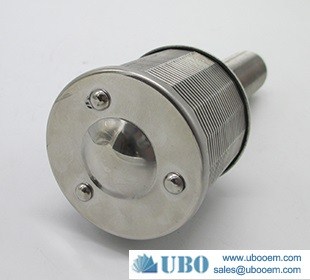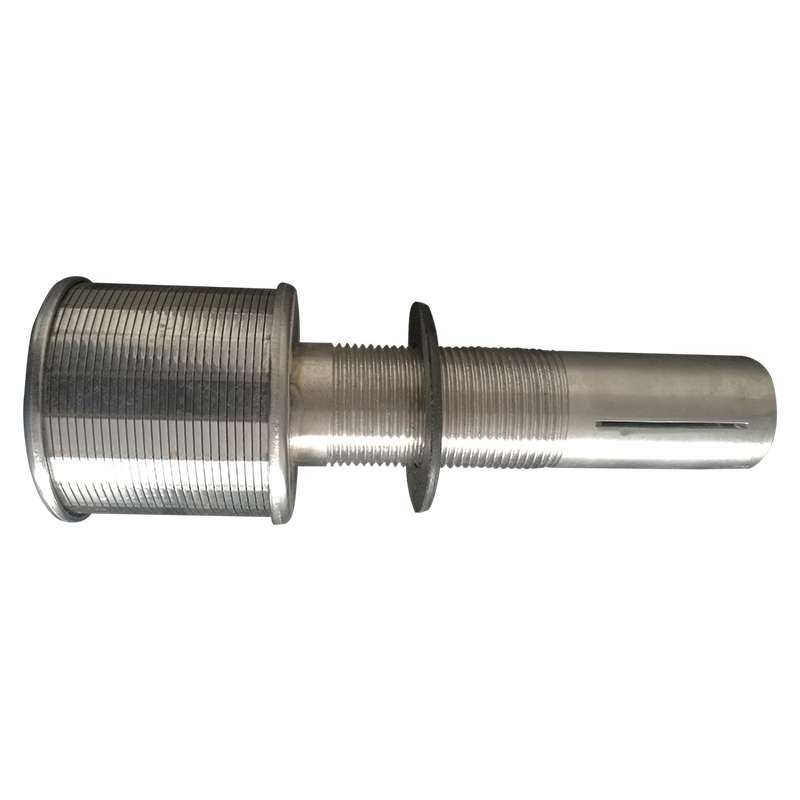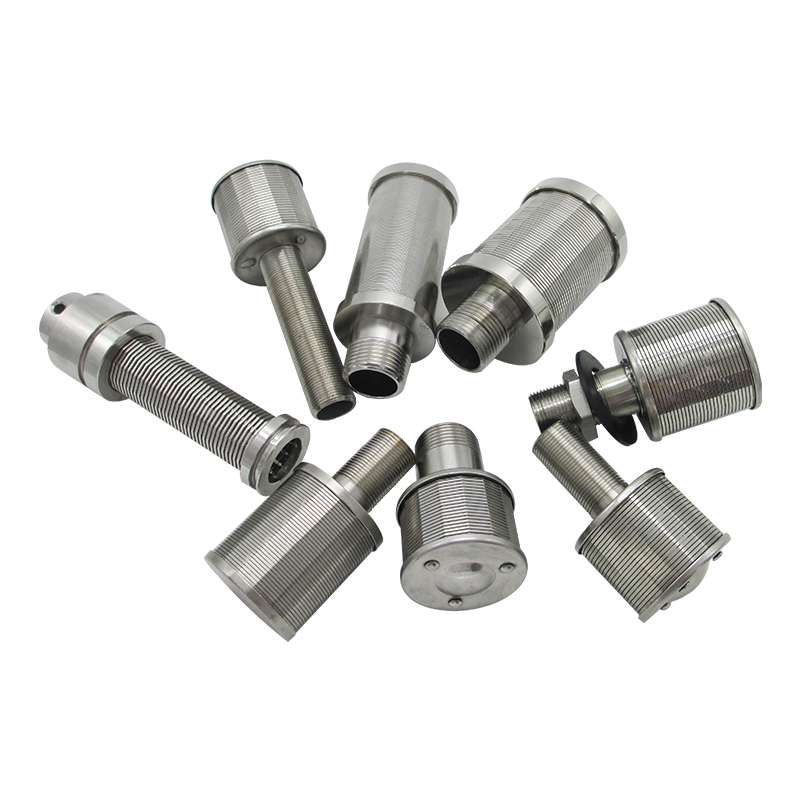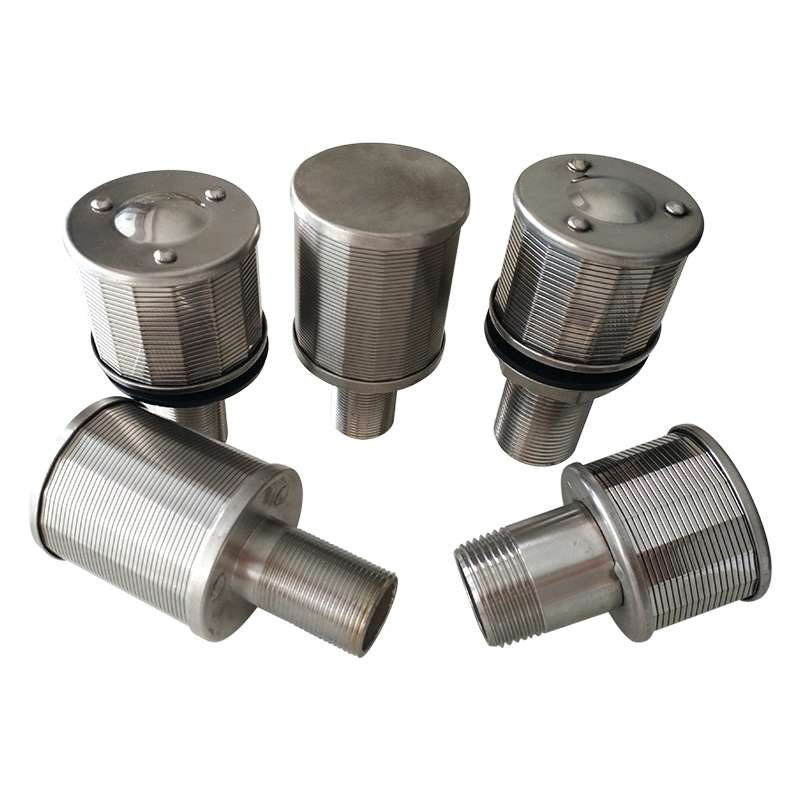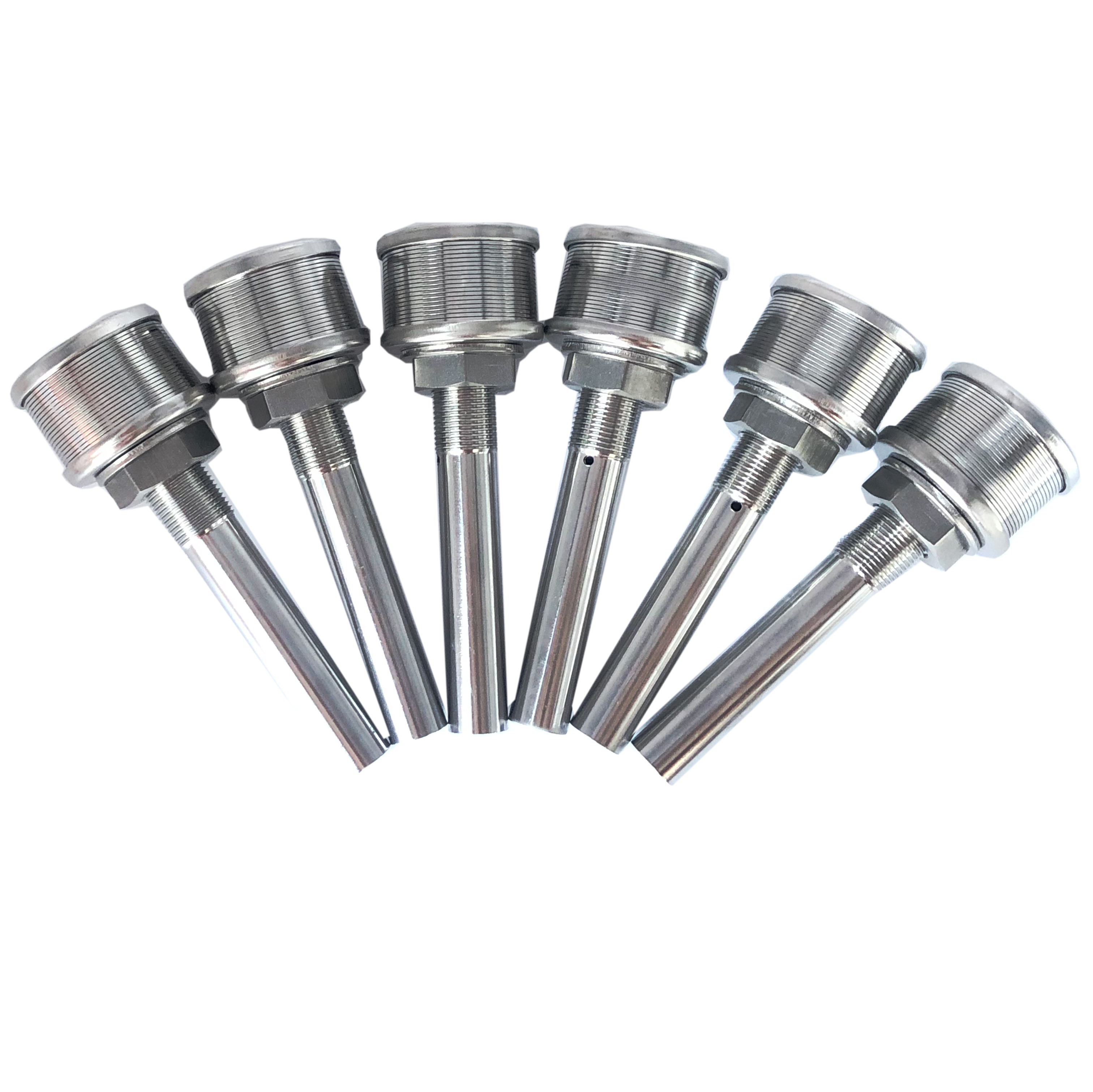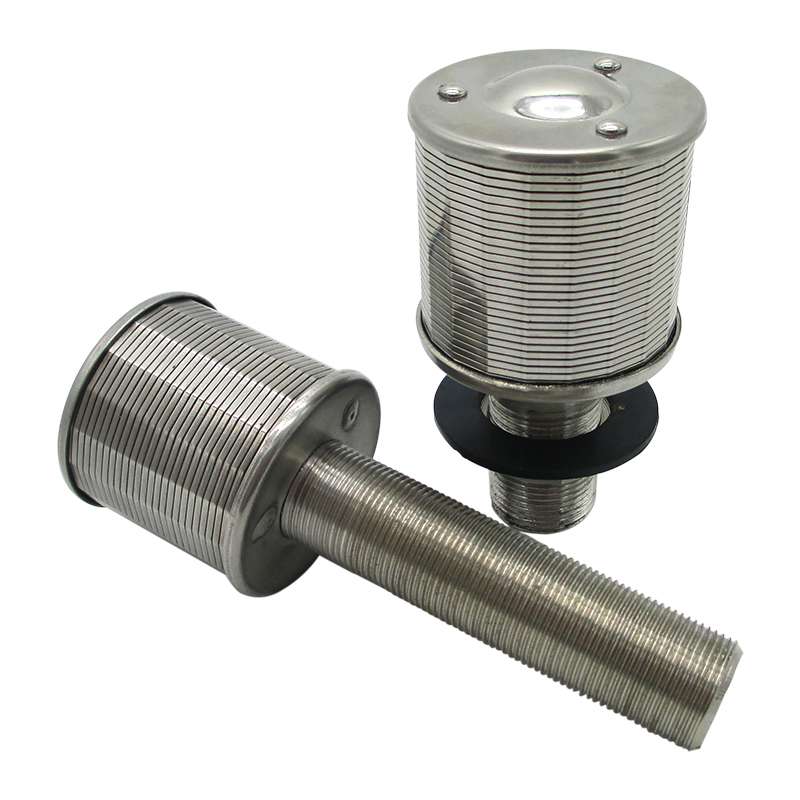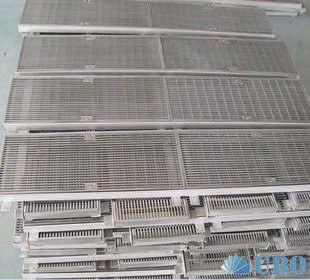
In industrial filtration systems, filter nozzles are often considered small accessories installed at the bottom or top of a vessel. However, their actual function extends far beyond media retention.
A properly designed wedge wire filter nozzle performs three simultaneous tasks:
Supporting filtration media under operating pressure
Controlling fluid exchange between the vessel and external piping
Maintaining uniform hydraulic conditions during filtration and regeneration
The performance of a filtration vessel is therefore influenced not only by the filter media itself, but also by how effectively the nozzle manages the movement of fluid through the media bed.
A nozzle that is incorrectly designed may cause uneven flow distribution, localized pressure loss, media migration, or inefficient backwashing, even when high-quality filtration media is used.
For this reason, wedge wire filter nozzle design should be treated as an engineering process rather than a simple product selection.
Traditional nozzle selection often starts with one question:
“What slot size is required?”
However, experienced engineers usually begin with another question:
“How should the fluid move through the filtration vessel?”
The nozzle is the transition point between:
The porous filtration layer
The internal vessel space
The external piping system
Its geometry affects:
Flow velocity distribution
Pressure balance
Media movement
Cleaning efficiency
Therefore, slot opening is only one part of the design equation.
A successful nozzle design must coordinate:
slot geometry + open passage area + installation arrangement + operating flow conditions
to achieve stable system performance.
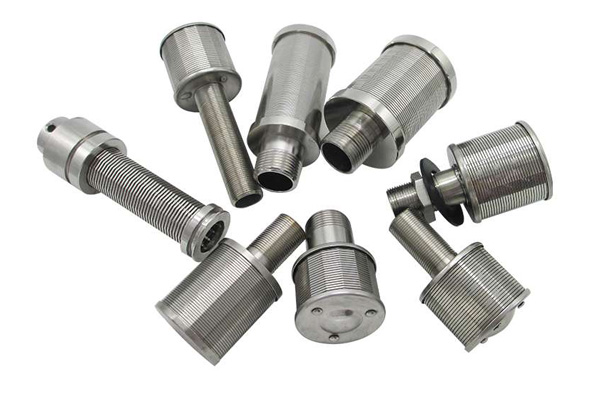
The unique feature of wedge wire construction is not simply the narrow opening, but the way the opening changes through the wire profile.
During operation, particles interact with the slot entrance before passing through the nozzle.
A well-designed slot geometry influences:
The opening must prevent valuable filtration media from entering the drainage system.
The internal widening structure helps reduce particles becoming permanently trapped.
During backwash cycles, the geometry assists in removing accumulated particles.
Therefore, slot design is a balance between retention capability and hydraulic freedom.
A smaller opening is not always better. Excessively restrictive openings can increase resistance and reduce the effectiveness of the entire filtration process.
Many filtration problems are not caused by poor filter media but by uneven hydraulic distribution.
When flow through the nozzle system is unbalanced, several problems may appear:
Uneven utilization of filter media
Formation of preferential flow paths
Reduced filtration efficiency
Incomplete media expansion during backwashing
For this reason, nozzle quantity, spacing, and flow capacity must be considered together.
The objective of engineering design is not to maximize individual nozzle flow, but to create balanced flow conditions across the entire filtration area.
A filter nozzle does not experience only static loading.
During service life, it may repeatedly encounter:
Filtration pressure differences
Backwash forces
Thermal changes
Mechanical impact from media movement
Therefore, structural design must consider long-term stability.
Important factors include:
The wire geometry determines how external loads are transferred.
Support rods provide reinforcement and maintain slot consistency.
The connection between wires and supports determines whether the nozzle maintains its designed geometry after years of operation.
A strong nozzle is not simply one that survives maximum pressure; it is one that maintains performance after thousands of operating cycles.
Material selection should be based on process conditions rather than standard preference.
The main evaluation factors include:
Chemical composition of the liquid
Temperature variation
Cleaning chemicals
Expected service period
For example:
General water treatment systems may prioritize corrosion resistance and cost efficiency.
Chemical processing applications may require enhanced resistance against aggressive media.
High-temperature applications require consideration of mechanical stability.
The best material choice is the one that maintains structural integrity throughout the expected operating lifecycle.
A common mistake in filtration projects is evaluating the nozzle separately from the vessel.
In reality, nozzle performance depends on:
Vessel diameter
Media depth
Underdrain configuration
Flow direction
Backwash method
A technically excellent nozzle may still perform poorly if it does not match the overall filtration system design.
Engineering decisions should therefore consider the complete relationship between:
filter vessel → media layer → nozzle arrangement → pipeline system
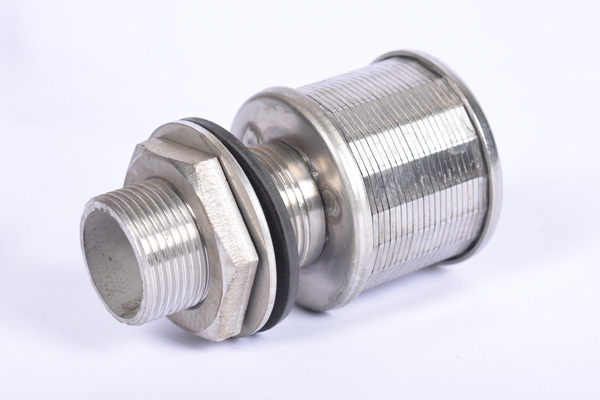
Engineering drawings define the concept, but manufacturing quality determines the final result.
Critical manufacturing factors include:
Consistent slot dimensions
Accurate wire positioning
Reliable welding joints
Controlled surface finishing
Small dimensional deviations can influence:
Flow resistance
Media retention
Cleaning efficiency
For precision filtration components, manufacturing consistency is part of the engineering design itself.
Modern filtration systems are moving toward:
Higher operating efficiency
Lower maintenance requirements
More compact equipment designs
Longer service intervals
Future nozzle development will focus less on simply increasing flow capacity and more on optimizing the interaction between:
Fluid dynamics
Material performance
Manufacturing precision
System reliability
The role of the filter nozzle is evolving from a passive filtering accessory into an active component of filtration system optimization.
Wedge wire filter nozzle engineering is fundamentally about controlling the relationship between fluid movement, filtration media, and equipment reliability.
The best nozzle design is not defined by a single parameter such as slot size or material grade. Instead, it results from the coordinated design of hydraulic performance, structural strength, manufacturing accuracy, and application requirements.
By approaching nozzle selection from an engineering perspective, filtration systems can achieve more stable operation, improved cleaning performance, and longer service life.
There is no single factor. Effective design requires balancing slot geometry, hydraulic capacity, structural strength, and operating conditions.
Because the nozzle controls how fluid enters and leaves the filtration media. Poor flow distribution can reduce media utilization and cleaning efficiency.
Not always. Different filtration systems require different nozzle dimensions, materials, and hydraulic designs.
The continuous slot structure provides controlled openings, mechanical stability, and predictable flow characteristics for demanding filtration applications.
 Tel
Tel
 WhatsApp
 Message
 Email
Email