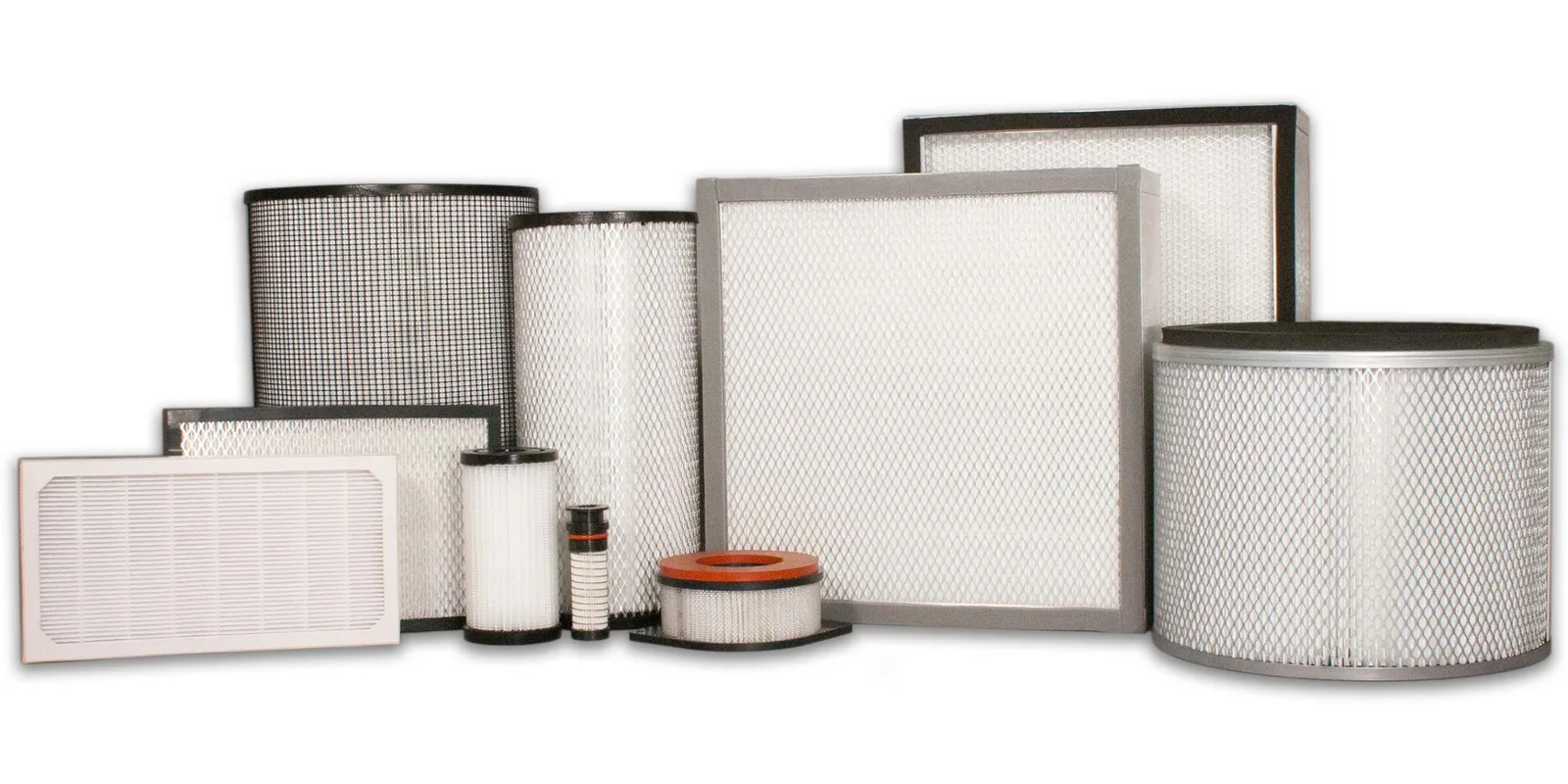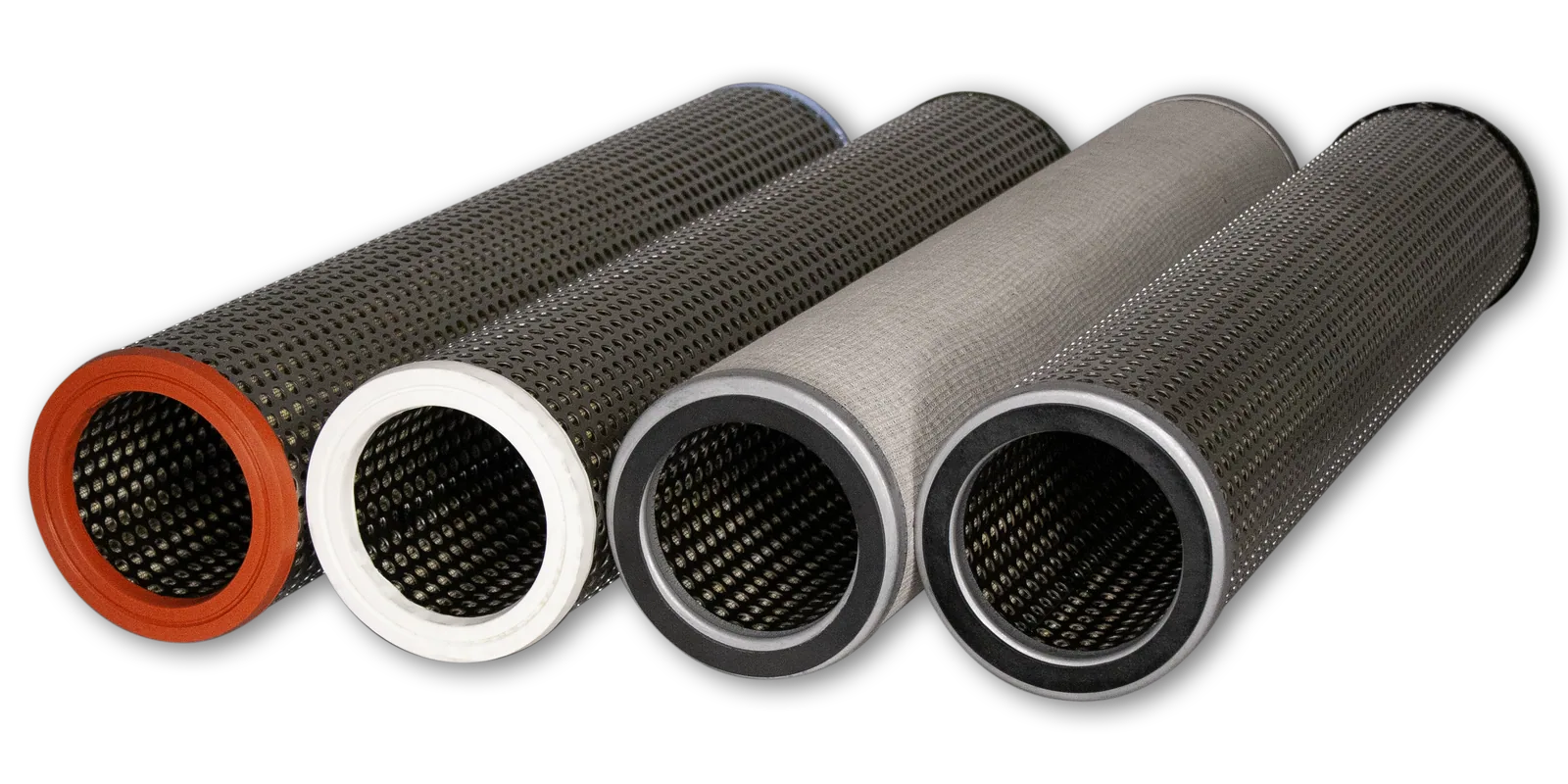
Labels fall off, get painted over, or come away with the old element when a machine is serviced by a third party. When that happens the part number is gone, and the question becomes whether the element can still be identified. Usually it can — a filter element carries more identity in its geometry than in its sticker.
Start with what the label still shows
Before measuring anything, note every fragment that remains: a stamped number on an end cap, an inkjet code on the media, an arrow moulded into the plastic. Stamped codes on the metal end cap survive cleaning far better than paper labels, and a partial number is often enough to narrow the family. Write down the machine make and model too — the element is usually listed in the machine's spare parts section even when the element itself is unbranded.
Five measurements that identify most elements
- Outer diameter, across the widest point of the element body, not the end cap flange.
- Inner diameter, measured at the bore where the element sits on its spigot or centre tube.
- Overall height, from the seating face of one end cap to the other — parallel to the axis, not along a pleat.
- End cap type and thickness: open both ends, open one end, closed one end, or a moulded plastic cap with a thread.
- Seal position and profile: a flat gasket on the end face, an O-ring in a groove, or a radial lip seal — and its approximate cross-section.
Measure in millimetres and write down the method you used, because two people measuring the same element often disagree by several millimetres depending on whether they included the flange.
End caps and seals decide whether it fits
Two elements can share every overall dimension and still be incompatible. The details that matter are the ones that locate the element: the spigot diameter, the depth of the recess the end cap sits in, and whether the seal is compressed axially or radially. A photograph of the housing opening, taken straight on with a scale bar in frame, resolves most of this faster than any description.
Describe the media by what it has to do
An element's filter medium is rarely identifiable by eye. What is identifiable is the duty: what is being removed (particulate, aerosol, moisture), from what (air, gas, hydraulic oil, coolant, water), at what working temperature, and at what flow. Those four answers constrain the medium far more tightly than a brand name, and they are the basis on which an equivalent can be proposed responsibly. If a beta ratio, efficiency class or test standard appears in the machine documentation, include it.
Photograph four things
- The element on its own, full length, against a plain background.
- Each end cap, end on, so the seal and any spigot are visible.
- The housing with the element removed, looking straight into the bore.
- Any remaining label, stamp or moulded marking, in focus.
What happens with the information
With geometry, duty and photographs, a replacement element can usually be proposed directly, or drawn if nothing standard matches. What we will not do is issue a cross-reference we cannot stand behind: if the original medium cannot be established, we will say so and propose a specification for approval rather than guess at one. That is slower on the first enquiry and considerably cheaper than a filter that fails in service.
If you have an element you cannot identify, send the measurements and photographs through the contact form or start from the cross-reference search.