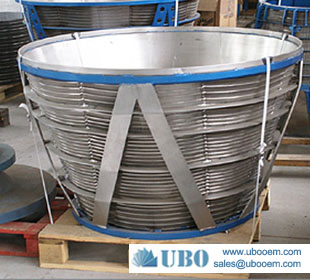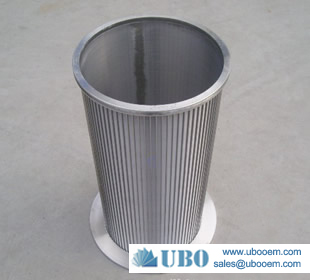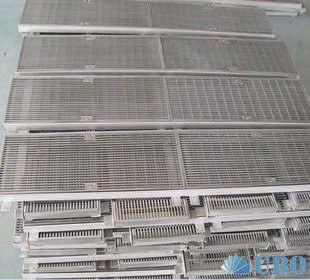
In water treatment and ion exchange systems, the Header Lateral System plays a critical role in maintaining uniform flow distribution and protecting downstream equipment. While headers and laterals are often considered the main flow control components, the resin trap design within the system is equally important for preventing media loss and ensuring long-term operational stability.
A properly designed resin trap allows fluids to pass efficiently while retaining valuable ion exchange resin, filter media, or catalyst particles inside the vessel. Poor resin trap design can lead to media carryover, equipment damage, pressure fluctuations, and reduced treatment efficiency.
For industrial applications such as water softening, demineralization, filtration, and chemical processing, optimizing resin trap design is essential for achieving reliable Header Lateral System performance.
A resin trap is a protective filtration component installed within or near the outlet section of a vessel to prevent resin particles from escaping with the treated fluid.
Its primary functions include:
Retaining ion exchange resin beads
Preventing media loss
Protecting pumps and downstream equipment
Maintaining stable filtration performance
During normal operation, fluid must flow freely through the resin trap while preventing the passage of resin particles.
This requires a precise balance between:
Filtration accuracy
Flow capacity
Pressure drop
Mechanical strength
One of the most important factors in resin trap design is selecting the correct slot opening.
If the slot size is too large:
Resin beads may escape
Downstream contamination may occur
Treatment efficiency may decrease
If the slot size is too small:
Flow resistance increases
Pressure drop rises
Fouling risk becomes higher
The ideal slot size depends on:
Resin bead diameter
Particle size distribution
Operating flow rate
Fluid characteristics
For most ion exchange applications, the slot opening is designed smaller than the smallest resin particle to provide reliable retention while maintaining sufficient hydraulic capacity.
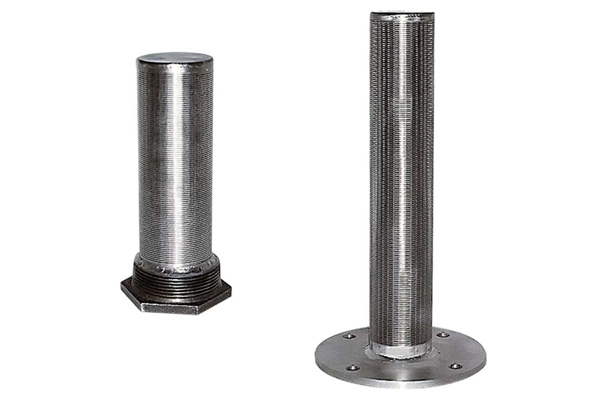
Many high-performance Header Lateral Systems use wedge wire technology for resin trap components.
The unique V-shaped profile wire structure provides several advantages compared with traditional mesh screens.
The slot opening becomes wider internally, reducing the possibility of particles becoming trapped inside the screen.
This helps maintain:
Stable flow
Lower pressure drop
Longer service intervals
The welded wedge wire structure can withstand:
Continuous flow pressure
Backwashing cycles
Thermal stress
Mechanical impact
The continuous slot design provides a larger effective filtration area, improving fluid passage while maintaining resin retention.
The resin trap is not an isolated component. Its performance directly affects the entire Header Lateral System.
A well-designed system ensures:
Even collection of treated water
Balanced flow across the vessel
Reduced channeling
Improved media utilization
Poor resin trap design can create uneven hydraulic resistance, causing some areas of the vessel to receive excessive flow while others become underutilized.
This reduces the efficiency of:
Ion exchange processes
Filtration cycles
Regeneration operations
Resin traps operate in environments involving water, chemicals, and repeated regeneration cycles.
Common materials include:
Suitable for general water treatment applications with moderate corrosion requirements.
Preferred for:
Chemical processing
High-purity water systems
More corrosive environments
Used where higher resistance is required against:
Chloride corrosion
Aggressive chemicals
Extreme operating conditions
Selecting the correct material improves durability and reduces maintenance frequency.
A properly designed resin trap should provide reliable media retention without creating excessive resistance.
Important design considerations include:
High velocity can increase pressure loss and accelerate wear.
Smooth wedge wire surfaces reduce particle accumulation.
Resin traps should support:
Backwashing
Hydraulic cleaning
Chemical cleaning when required
Effective maintenance helps maintain long-term system performance.
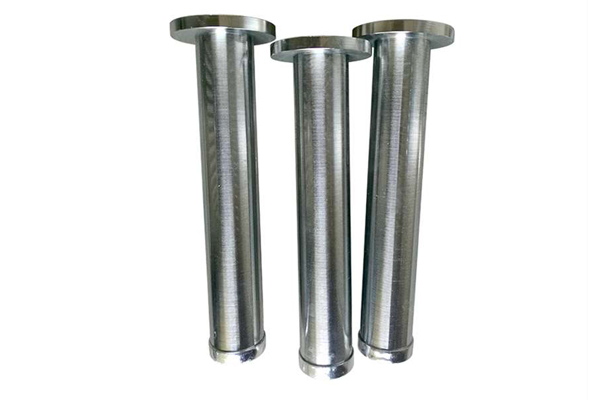
Header lateral systems with resin traps are widely used in:
Ion exchange vessels
Water softeners
Demineralization systems
Activated carbon filters
Multimedia filtration systems
Industrial water treatment equipment
They are essential for maintaining reliable separation between treatment media and process fluids.
A resin trap prevents ion exchange resin or filtration media from leaving the vessel while allowing treated fluid to pass through.
Wedge wire provides high strength, large open area, and anti-clogging performance, making it suitable for continuous industrial operation.
Slot size depends on resin bead diameter, particle distribution, flow requirements, and the required level of media retention.
Yes. Properly designed wedge wire resin traps can withstand repeated backwashing cycles while maintaining structural integrity.
The Header Lateral System depends on more than just efficient flow collection and distribution. Resin trap design is a critical factor that determines media retention, pressure stability, and overall system reliability.
By optimizing slot size, wedge wire structure, material selection, and hydraulic performance, industries can reduce resin loss, improve treatment efficiency, and extend equipment service life.
A well-designed resin trap is not simply a protective component—it is an essential part of achieving efficient and reliable water treatment performance.
 Tel
Tel
 WhatsApp
 Message
 Email
Email