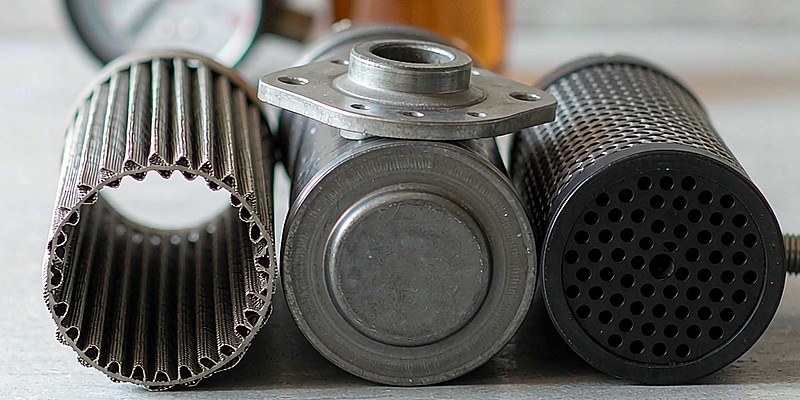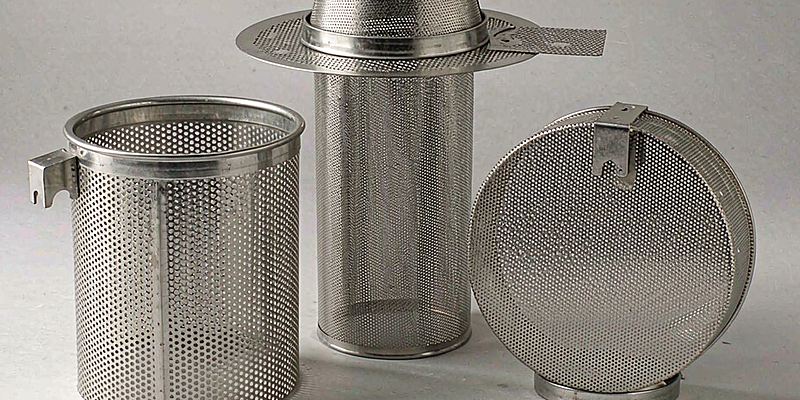
An OEM filter cross-reference table helps identify alternative filter elements for existing equipment. However, a matching part number does not automatically mean two filters have identical filtration performance or service life.
Before ordering a replacement, verify its dimensions, end-cap configuration, sealing materials, filtration efficiency and operating compatibility.
1. What Does a Filter Cross-Reference Table Show?
A typical filter cross-reference table may include:
• OEM part number: The original filter reference.
• OEM brand: The manufacturer associated with the original part.
• Replacement part number: The alternative supplier's reference.
• Product description: Filter type or application.
• Notes: Reision details or alternative references.
The exact columns vary between manufacturers and databases.
A cross-reference match is a starting point, not proof of complete interchangeability. Two elements may share similar dimensions but use different filter media, support structures or sealing materials.
2. Understand Common Cross-Reference Terms
| Term | Meaning |
| Replaces | Identifies an alternative to an existing part |
| Supersedes | Indicates a newer part number replacing an earlier reference |
| Alternative / Alt | Lists another possible replacement |
| Equivalent | Claims comparable product characteristics |
| OEM Reference | Identifies the original manufacturer's part number |
One OEM number may have several replacement candidates. Check suffixes, revisions and equipment references to identify the correct version.
Do not assume that every listed alternative is suitable for every installation.
3. Five Checks Before Ordering a Replacement Filter
| Check | What to Verify | Possible Issue |
| Dimensions | OD, ID, length and locating features | Incorrect fit |
| End caps and seals | Connection design and gasket material | Leakage or poor sealing |
| Media and efficiency | Media type, beta ratio and dirt capacity | Different filtration performance |
| Flow direction | Inside-out or outside-in | Reduced filtration reliability |
| Strength and compatibility | Collapse rating and fluid compatibility | Structural damage or material failure |
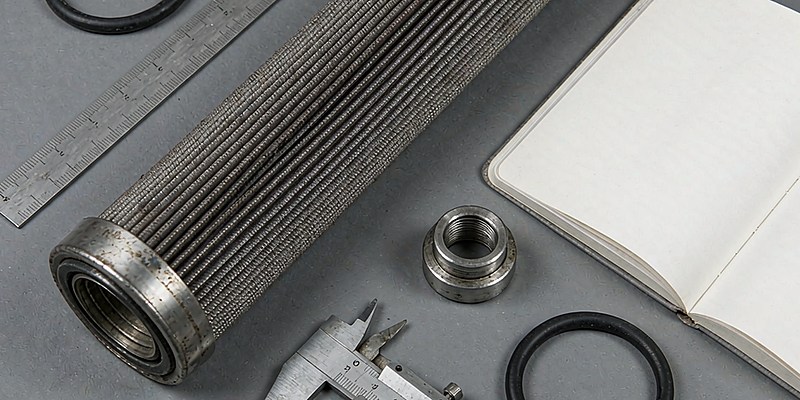
• Dimensions: Compare outside diameter, inside diameter, overall length and connection details. A physical sample or original drawing can help confirm compatibility.
• End caps and seals: Check open or closed ends, threads, bayonet fittings and gasket materials. The correct dimensions alone do not guarantee a proper seal.
• Filter media: Different media constructions can produce different filtration efficiencies, pressure drops and dirt-holding capacities. For hydraulic elements, request beta ratio data at a specified particle size and check the ISO 16889 test method.
• Flow direction: Confirm whether the element uses inside-out or outside-in flow. Incorrect flow direction can affect media support and sealing performance, depending on the design.
• Strength and fluid compatibility: Check collapse pressure, flow fatigue resistance and material compatibility. ISO 2941, ISO 3724 and ISO 2943 cover relevant verification methods for hydraulic filter elements.
4. Example: Comparing Two Cross-Reference Entries
The following is an illustrative example using fictional part numbers and specifications.
| Reference | Original Element | Replacement Candidate |
| Part number | OEM-A100 | YB-R100 |
| Outside diameter | 100 mm | 100 mm |
| Overall length | 250 mm | 250 mm |
| End-cap design | Open / closed | Open / closed |
| Seal material | NBR | NBR |
| Filtration rating | β5(c) = 200 | β5(c) = 200 |
| Flow direction | Inside-out | Inside-out |
The listed specifications appear to match, but this does not prove complete interchangeability. Internal support structure, operating pressure, fluid compatibility and other application requirements should also be checked.
If important specifications are unavailable, treat the candidate as a potential alternative rather than a confirmed equivalent.
5. Why Can Cross-Reference Results Be Inaccurate?
Several issues can lead to incorrect replacement selection:
• Different revisions: A newer element may retain similar dimensions but use different materials or connections.
• Different applications: Pressure-line and return-line filters may share dimensions but require different structural ratings.
• Incomplete information: Some databases list part numbers without media, efficiency or flow direction.
• Unverified equivalence: Similar appearance or dimensions do not establish equal filtration performance.
6. What Information Should You Send to a Supplier?
To help identify a suitable replacement, provide:
• Original filter part number and label photo.
• Outside diameter, inside diameter and overall length.
• Photos of both end caps.
• Housing or equipment model.
• Filter media and micron rating, if known.
• Fluid type, viscosity and operating temperature.
• Flow rate and operating pressure.
• Required cleanliness level and bypass arrangement.
A physical sample or technical drawing can help resolve missing details.
With this information, the supplier can evaluate whether a suitable replacement is available or whether a customized alternative may be possible.
Frequently Asked Questions
1. Does a filter cross-reference guarantee OEM equivalence?
No. It identifies a possible alternative. Dimensions, connections, sealing, filtration performance and operating conditions still need verification.
2. Can I order a replacement filter using only the OEM part number?
A part number is a useful starting point, but it may not provide enough information. For critical applications, confirm dimensions, end caps, filtration specifications and operating requirements.
3. What is the difference between an OEM filter and an OEM replacement filter?
An OEM filter is supplied by the original equipment manufacturer or its authorized supply chain. An OEM replacement filter is produced by another manufacturer as an alternative for the specified application. Replacement suppliers should not imply OEM authorization without permission.
Find a Suitable Replacement Filter Element
YUBO supports industrial filter element enquiries involving part-number identification, dimensional verification and customized replacement requirements.
Send us your original part number, filter photos, dimensions and application details. We can evaluate whether a suitable match or alternative can be offered.
A verified match is better than an unconfirmed replacement.