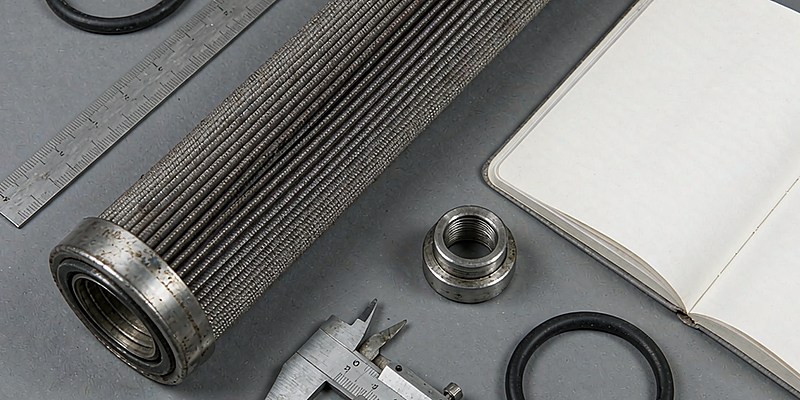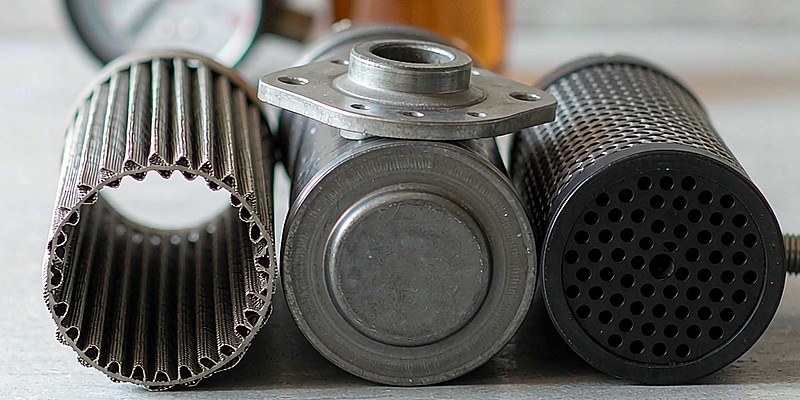
Temporary strainers are installed between pipeline flanges during commissioning to catch weld slag, mill scale, rust and other construction debris before it reaches pumps, valves and downstream equipment.
Cone, basket and flat plate strainers serve the same purpose but differ in screen area, debris capacity and cleaning requirements. The right choice depends on pipeline conditions, available space and expected solids loading.
Cone vs Basket vs Plate: Key Differences
| Feature | Cone / Witch Hat Strainer | Basket Strainer | Flat Plate Strainer |
| Screen area | Large effective area within a short flange gap | Large area, depending on basket dimensions | Limited by plate diameter and perforation pattern |
| Debris capacity | Good, depending on cone size and screen design | Generally high | Relatively limited |
| Installation space | Compact axial arrangement | Requires additional space for the basket housing | Compact |
| Cleaning | Removed with the flange for cleaning | Basket can be removed and cleaned | Simple removal, but may require frequent cleaning |
| Typical application | Temporary pump and pipeline protection | Applications with higher solids loading | Short-duration, relatively low-solids applications |
Actual performance depends on screen design, mesh or perforation size, flow rate and debris loading. This table provides a general comparison, not a fixed performance ranking.
Why Open Area Matters
During commissioning, construction debris may enter a pipeline in sudden bursts. If the strainer has insufficient open area, debris can block the screen quickly and increase differential pressure (ΔP).
On pump suction lines, excessive pressure loss can reduce available net positive suction head (NPSH), potentially causing cavitation and unstable operation.
Open area should be specified alongside mesh or perforation size. Its required value depends on flow conditions, expected debris and project specifications. A finer screen captures smaller particles but may also clog faster during flushing.
Where practical, pressure taps on both sides of the strainer allow operators to monitor ΔP and determine when cleaning is needed.
Cone Strainer Installation Direction
Cone strainers, also called witch hat strainers, provide a relatively large screening surface within limited axial space.
Their installation direction depends on the mesh support arrangement. In some designs, the mesh must face the flow with the perforated cone supporting it. Other configurations may use a different arrangement or allow reverse flow.
Always follow the flow arrow on the strainer handle or the manufacturer's installation drawing. Incorrect orientation can damage the mesh or allow debris to pass downstream.
What to Include in a Strainer Specification
When requesting a temporary strainer, provide the following information:
• Pipeline details: Line size, flange standard, pressure class and facing type.
• Screen requirements: Mesh or perforation size and required open area.
• Expected debris: Weld slag, mill scale, rust, sand or other solids.
• Materials: Screen, support ring and handle materials, such as SS304 or SS316L, selected for fluid compatibility.
• Operating conditions: Flow rate, fluid type, viscosity, design pressure and temperature.
• Monitoring: Pressure taps or differential pressure gauge, where required.
• Identification: A visible tag showing the strainer's identification and installation details.
Keep the identification tag in place so commissioning and maintenance teams can locate and identify the strainer during inspection and removal.
When Should a Temporary Strainer Be Removed?
Temporary strainers are designed for commissioning and startup protection, not automatically for permanent operation.
Before removal, confirm that pipeline flushing is complete, inspect the collected debris and review the ΔP trend where monitoring is available. For pump suction applications, also consider the pump's available NPSH.
Removing the strainer too early may allow construction debris to reach downstream equipment. Leaving it installed longer than necessary can create an unwanted flow restriction and increase screen loading.
Follow the approved commissioning procedure for removal. If continuous protection is required, select a permanent strainer designed for the operating conditions.
Frequently Asked Questions
1. What is the difference between a cone strainer and a basket strainer?
A cone strainer provides a relatively large screen area within a short flange gap. A basket strainer generally offers greater debris-holding capacity, depending on basket dimensions and screen design.
2. Which temporary strainer has the lowest pressure drop?
There is no universal answer. Pressure drop depends on open area, screen specification, flow rate and debris loading. Compare manufacturer data under the actual operating conditions.
3. Can a temporary strainer remain in a pipeline permanently?
Temporary strainers are generally intended for commissioning and startup. For continuous filtration, use a permanent strainer designed for the required operating conditions.
Temporary Strainers for Industrial Projects
YUBO manufactures temporary strainers in different configurations for industrial pipeline applications.
Visit our Temporary Strainer page to review available designs, or learn more about our EPC and Plant Commissioning solutions.
Contact our team with your line size, flange specifications, operating conditions and expected debris. We can review your requirements and provide a suitable design and quotation.