In industrial water treatment systems, the performance of a filtration unit depends not only on the filter media but also on the internal flow distribution components. Among these components, the header lateral system plays a critical role in controlling filtration efficiency, backwash uniformity, and overall system reliability.
A poorly designed header lateral system can create uneven flow distribution, channeling, incomplete backwashing, and premature media failure. In contrast, a properly engineered lateral design improves hydraulic balance, reduces pressure loss, and extends the operating life of filtration equipment.
What Is a Header Lateral System?
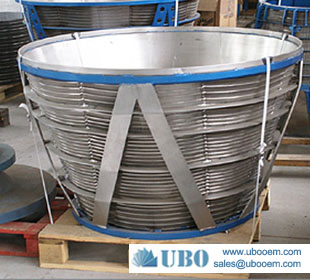
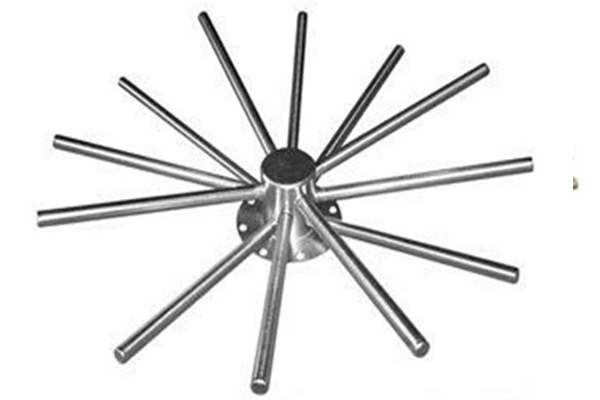
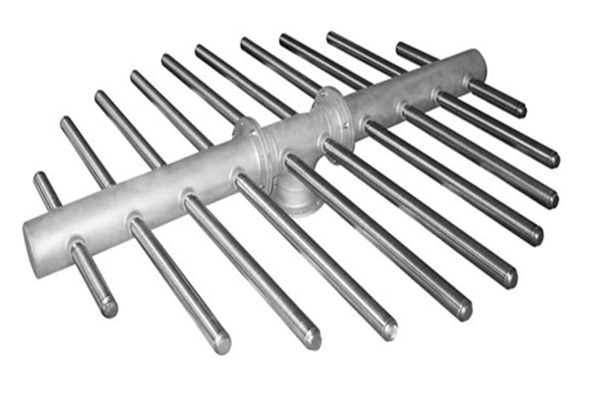
A header lateral system is an internal water collection and distribution assembly installed inside pressure vessels, sand filters, activated carbon filters, ion exchange systems, and other treatment equipment.
The system typically consists of:
Central header pipe
Multiple lateral pipes
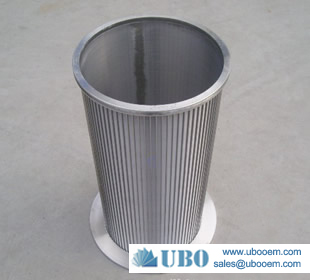
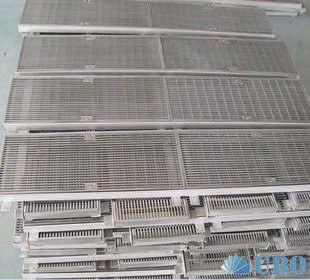
Wedge wire filter laterals or nozzles
Support structures
Connection fittings
During normal filtration, water flows through the filter media and is collected evenly through the laterals.
During backwashing, the flow direction reverses, allowing water to expand and clean the filter media while contaminants are removed.
The effectiveness of both processes depends heavily on lateral design.
Uniform flow distribution is one of the most important functions of a header lateral system.
If laterals are incorrectly designed, some areas of the filter bed may receive excessive flow while others receive insufficient flow.
This can result in:
Channeling
Uneven media utilization
Reduced contaminant removal efficiency
Increased pressure drop
A well-designed lateral system ensures that water passes evenly through the entire filter bed, maximizing the available filtration area.
Key design factors include:
Number of laterals
Lateral spacing
Pipe diameter
Slot opening
Open area ratio
The slot opening of wedge wire laterals is a critical design parameter.
The slot size must balance two requirements:
Allow sufficient water flow
Prevent filter media loss
If the slot is too small:
Pressure loss increases
Flow capacity decreases
Fouling risk increases
If the slot is too large:
Filter media may escape
Filtration efficiency decreases
For many sand and multimedia filtration systems, slot openings are commonly selected based on media particle size and operating conditions.
The continuous V-shaped slot design of wedge wire laterals provides an important advantage by reducing particle blockage and improving cleaning efficiency.
3. Header Lateral Design Controls Backwash Quality
Backwashing is essential for restoring filter performance. However, effective cleaning requires uniform water distribution.
An improperly designed lateral system may cause:
Uneven media expansion
Dead zones during backwash
Remaining contaminants after cleaning
Shorter filtration cycles
A properly designed system provides:
Balanced backwash flow
Uniform media movement
Effective contaminant removal
Reduced water consumption
The open area of the laterals must be sufficient to handle the required backwash velocity without creating excessive pressure loss.
4. Open Area and Pressure Drop Relationship
Open area is a key hydraulic parameter in lateral design.
Higher open area generally provides:
Greater flow capacity
Lower pressure drop
Improved energy efficiency
Wedge wire laterals achieve high open area through continuous slot construction compared with conventional drilled pipes.
However, excessive open area without proper structural support may reduce mechanical strength.
Therefore, engineers must balance:
Hydraulic performance
Mechanical durability
Media retention requirements
Header lateral systems operate continuously in water and chemical environments, making corrosion resistance essential.
Common materials include:
| Material | Typical Applications |
|---|---|
| SS304 | General water treatment |
| SS316L | Chemical and high-corrosion environments |
| Duplex Stainless Steel | High chloride or seawater applications |
| PVC/PP | Certain low-temperature applications |
Stainless steel wedge wire laterals are widely preferred because they provide:
High mechanical strength
Long service life
Resistance to corrosion
Stable slot geometry
Even a well-designed lateral system can fail if manufacturing accuracy is poor.
Important quality factors include:
Consistent slot dimensions
Accurate welding
Smooth surface finish
Proper structural reinforcement
High-quality wedge wire manufacturing ensures stable flow characteristics throughout the equipment lifecycle.
Applications of Header Lateral Systems
Header lateral assemblies are widely used in:
Sand filters
Activated carbon filters
Ion exchange vessels
Multimedia filtration systems
Drinking water treatment
Industrial wastewater treatment
Desalination systems
Process water filtration
They are especially important where stable filtration cycles and efficient backwashing are required.
Select slot size according to filter media characteristics.
Calculate required flow and backwash velocity.
Maintain sufficient open area.
Ensure uniform lateral distribution.
Choose corrosion-resistant materials.
Use precision-manufactured wedge wire components.
Regularly monitor pressure drop and system performance.
A properly engineered header lateral system can significantly improve filtration efficiency while reducing maintenance frequency.
FAQ
Header lateral design determines how evenly water is collected and distributed through the filter media, directly affecting filtration efficiency and backwash performance.
Slot size influences flow capacity, pressure drop, and media retention. The correct slot opening ensures efficient filtration while preventing media loss.
Wedge wire laterals provide high open area, excellent mechanical strength, and reduced clogging compared with traditional perforated pipes.
Uniform lateral arrangement, proper open area, and correct hydraulic design help achieve balanced backwash flow and more effective media cleaning.
The design of a header lateral system has a direct impact on filtration efficiency, backwash effectiveness, and long-term equipment reliability. Factors such as slot size, open area, flow distribution, material selection, and manufacturing precision all influence system performance.
By optimizing header lateral design according to specific filtration requirements, engineers can achieve more uniform operation, lower pressure loss, improved backwashing, and extended filter media life.
For modern water treatment and industrial filtration systems, a well-designed header lateral assembly is not just an internal component—it is a key factor in achieving stable and efficient filtration performance.
 Tel
Tel
 WhatsApp
 Message
 Email
Email